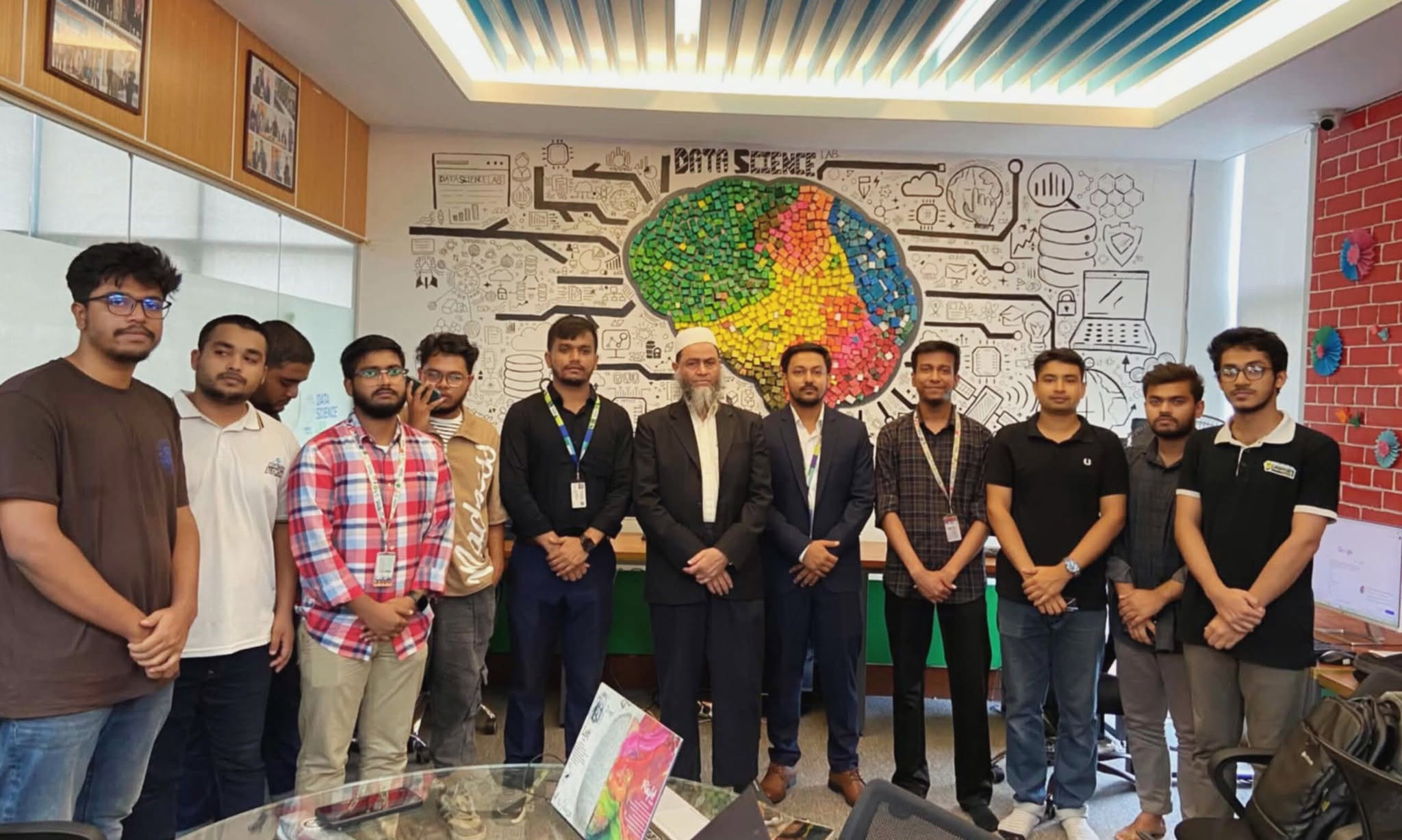
Date: 25 June 2026
Venue: International Conference Hall, Knowledge Tower, Daffodil
International University
Event: Motivational, Research & Higher Study Seminar with Prof. Dr.
Saidur Rahman
Today was a truly inspiring and memorable day in my academic journey. I had the honor of meeting Prof. Dr. Saidur Rahman, one of the most distinguished researchers in the field of Mechanical Engineering and a globally recognized academic leader. The seminar, titled “Motivational, Research & Higher Study Seminar with Prof. Dr. Saidur Rahman,” was held at the International Conference Hall, Knowledge Tower, Daffodil International University.
The event brought together students, researchers, faculty members, and academic enthusiasts who share a strong interest in research, innovation, higher studies, and professional development. For young researchers and students like me, it was a rare opportunity to learn directly from a scholar whose work has achieved remarkable global recognition.
Prof. Dr. Saidur Rahman is recognized among the World’s Top 2% Scientists and has earned an exceptional international reputation for his research contribution. According to the seminar announcement, he is ranked #7 globally, #2 in Asia, and #1 in Malaysia in Mechanical Engineering. These achievements reflect not only his academic excellence but also his long-term dedication, consistency, and contribution to global research.
The seminar focused on the importance of building a strong research mindset, maintaining academic discipline, and preparing for higher studies with clear goals. One of the most valuable parts of the session was understanding how global researchers think, plan, collaborate, and contribute to knowledge beyond national boundaries. Prof. Dr. Saidur Rahman’s journey showed that research excellence is not achieved overnight; it requires curiosity, patience, hard work, and continuous learning.
As a Software Engineering student and an undergraduate researcher, I found the session highly motivating. Although Prof. Dr. Saidur Rahman’s primary field is Mechanical Engineering, his message was relevant for students from all academic disciplines, including software engineering, data science, artificial intelligence, and healthcare technology. His experience reminded me that impactful research often comes from interdisciplinary thinking and the ability to connect ideas across different fields.
The seminar also emphasized the importance of higher studies and international academic exposure. For students who dream of pursuing research-based careers or studying abroad, this session provided valuable guidance and inspiration. It highlighted the need to develop strong research profiles, publish quality work, collaborate with experienced researchers, and remain consistent despite challenges.
Meeting such a globally respected academic in person was a great source of encouragement for me. It reminded me why research matters and how meaningful academic work can create long-term impact. The experience strengthened my motivation to continue working on machine learning, healthcare AI, public health research, and evidence-based decision-support systems.
The event was organized by the Department of Software Engineering and supported by the Data Science Club. As someone involved with the Data Science Club, I feel proud to see such meaningful academic initiatives being arranged for students. Events like this help build a research culture, encourage young learners, and create opportunities for academic growth.
Overall, this seminar was more than just an academic event. It was a reminder that research is a journey of discipline, curiosity, and service to society. I am grateful for the opportunity to meet Prof. Dr. Saidur Rahman and learn from his remarkable research experience. His words and achievements will continue to inspire me in my own academic and research journey.
Key Takeaways from the Seminar
The seminar helped me understand that successful research requires consistency, patience, and a clear vision. It also showed the importance of interdisciplinary collaboration, international exposure, and continuous learning. Most importantly, it reminded me that young researchers should not only focus on publications but also on solving meaningful problems that can create real-world impact.